Saturday, November 17, 2012

CFP: Anime and Manga [PCA/ACA, Washington D.C.] (Nov. 30; Mar. 27-30)

CFP:
Anime and Manga
PCA/ACA 2013 National Conference
Washington D.C.
March 27-30, 2013

This is the national meeting of the Popular Culture Association and the American Culture Association. This submission is under the area “Asian Popular Culture.” There are two “Calls for Papers.”  

Deadline: November 30, 2012

Submissions should be submitted online. Instructions can be found here: http://pcaaca.org/national-conference-2/proposing-a-presentation-at-the-conference/

In addition, please submit your proposal to Wendy Goldberg (wdgoldbe@olemiss.edu), who will organize these panels.

CFP: The “Abject” in Anime and Manga

This call is for papers that focus on the “abject” in anime and manga. French theorist, Julia Kristeva, in her essay, “Powers of Horror,” defines the abject as that which threatens the boundary between subject and object, producing fear and revulsion.  The classic “abject” example would be the corpse which is like/unlike a living body.

Papers may not necessarily deal directly with Kristeva’s theories but participants are encouraged to explore the use of the horrific or the grotesque in anime and manga. Papers may explore how the abject comment on social or political institutions in addition to individual identities.

CFP: Teaching with Anime and Manga

Participants are encouraged to submit proposals about how they teach courses on anime and manga or how they integrate anime and manga into classes. Some questions to consider:
  • What do you teach and how do you teach it? 
  • How does anime and manga support the goals of the class?
  • What has been student reaction to the subject?
  • What has been the institution’s reaction to the subject?

Labels: , , , , , , , , , ,


Monday, September 24, 2012

CFPs (4): Comics at NEMLA (Sept. 30; Mar. 21-24)


Calls for Papers
44th Annual Convention
Northeast Modern Language Association
(NEMLA)
March 21 to 24, 2013
Boston, Massachusetts
Hosted by Tufts University


Panels and Pedagogy: Teaching the Graphic Novel
This panel works towards understanding and adding to emerging pedagogies of the graphic novel and other forms of illustrated works. What do these visual texts change about how we approach the classroom? Possible topics include but are not limited to adaptation and teaching across mediums and disciplines; the graphic novel as literature; approaches to visuality as composition; and the limits of genre and medium. Submit 250- to 500-word proposals by September 30, 2012, to Joel Simundich (joel_simundich@brown.edu) and Derek McGrath (derek.mcgrath@stonybrook.edu).

The Sequential Monster:  Reading Comics as Monstrous
Comic books, graphic novels and webcomics generally combine words and images to create narratives. Though comics are often considered a form in their own right, it is also possible to see them as an amalgam of disparate forms of communication. If we think of comics that way, perhaps we can see them, fruitfully, as monstrous: beasts that combine the elements of verbal and visual, narrative and static communication forms. This panel will examine a social understanding of the comics form (and the kinds of literacies required to accept it) using Scott McCloud’s and Will Eisner’s comics theories as well as Jeffrey Jerome Cohen’s monster theory. Abstracts of 300 words to lauere@sunysuffolk.edu by September 30.

Show and Tell: A Roundtable of Comic Book and Graphic Novel Creators
This event hosts artists from a wide spectrum of roles as related to the creation of comic books and graphic novels. This roundtable welcomes participants from around the world and regardless of genre, medium, or years of experience. Artists in the roundtable should bring visual materials to facilitate discussion with a diverse audience of students, professors, and overall fans of this art form. Submit resumes by September 30, 2012, to Derek McGrath at SUNY Stony Brook (derek.mcgrath@stonybrook.edu).

Comics Theory
This panel invites papers that explore comics theory. In what ways has comics theory evolved over the past twenty-five years? What are the current debates? In what ways have comics artists themselves shaped these debates? In what ways does American comics theory differ from comics theory that originated in France or Japan? In what ways have graphic narratives themselves taught readers how to understand the form? Please send completed papers or 300-word abstracts to Davida Pines at dpines@bu.edu. Deadline for proposals: Sep 30, 2012.

---

Conference information
44th Annual Convention
Northeast Modern Language Association (NEMLA)
March 21 to 24, 2013
Boston, Massachusetts
Hosted by Tufts University

The 2013 NEMLA convention continues the Association’s tradition of sharing innovative scholarship in an engaging and generative location. The 44th annual event will be held in historic Boston, Massachusetts, a city known for its national and maritime history, academic facilities and collections, vibrant art, theatre, and food scenes, and blend of architecture. The Convention, located centrally near Boston Commons and the Theatre District at the Hyatt Regency, will include keynote and guest speakers, literary readings, film screenings, tours and workshops.

Interested participants may submit abstracts to more than one NEMLA session; however, panelists can only present one paper (panel or seminar). Convention participants may present a paper at a panel and also present at a creative session or participate in a roundtable.  A/V requirements include a $10 handling fee to be paid with conference registration.
For more information on numerous panels, please visit the NEMLA call for papers web site (http://www.nemla.org/convention/2013/cfp.html).

Labels: , , , , , , ,


Tuesday, July 24, 2012

CFP: Comic Books and Graphic Novels / NEMLA (Sept. 30; Mar. 21-24)

Calls for papers: 
Comic Books and Graphic Novels
Northeast Modern Language Association (NEMLA)
44th Annual Convention
March 21 to 24, 2013
Boston, Massachusetts
Hosted by Tufts University

The 2013 NEMLA convention continues the Association’s tradition of sharing innovative scholarship in an engaging and generative location. The 44th annual event will be held in historic Boston, Massachusetts, a city known for its national and maritime history, academic facilities and collections, vibrant art, theatre, and food scenes, and blend of architecture. The Convention, located centrally near Boston Commons and the Theatre District at the Hyatt Regency, will include keynote and guest speakers, literary readings, film screenings, tours and workshops.

Interested participants may submit abstracts to more than one NEMLA session; however, panelists can only present one paper (panel or seminar). Convention participants may present a paper at a panel and also present at a creative session or participate in a roundtable.  A/V requirements include a $10 handling fee to be paid with conference registration.

For more information on numerous panels, please visit the NEMLA call for papers web site.

Panels and Pedagogy: Teaching the Graphic Novel
This panel works towards understanding and adding to emerging pedagogies of the graphic novel and other forms of illustrated works. What do these visual texts change about how we approach the classroom? Possible topics include but are not limited to adaptation and teaching across mediums and disciplines; the graphic novel as literature; approaches to visuality as composition; and the limits of genre and medium. Submit 250- to 500-word proposals by September 30, 2012, to Joel Simundich (joel_simundich@brown.edu) and Derek McGrath (derek.mcgrath@stonybrook.edu).

The Sequential Monster:  Reading Comics as Monstrous
Comic books, graphic novels and webcomics generally combine words and images to create narratives. Though comics are often considered a form in their own right, it is also possible to see them as an amalgam of disparate forms of communication. If we think of comics that way, perhaps we can see them, fruitfully, as monstrous: beasts that combine the elements of verbal and visual, narrative and static communication forms.  This panel will examine a social understanding of the comics form (and the kinds of literacies required to accept it) using Scott McCloud’s and Will Eisner’s comics theories as well as Jeffrey Jerome Cohen’s monster theory.  Abstracts of 300 words to lauere@sunysuffolk.edu by September 30.

Show and Tell: A Roundtable of Comic Book and Graphic Novel Creators
This event hosts artists from a wide spectrum of roles as related to the creation of comic books and graphic novels. This roundtable welcomes participants from around the world and regardless of genre, medium, or years of experience. Artists in the roundtable should bring visual materials to facilitate discussion with a diverse audience of students, professors, and overall fans of this art form. Submit resumes by September 30, 2012, to Derek McGrath at SUNY Stony Brook (derek.mcgrath@stonybrook.edu).

Labels: , , , ,


Saturday, June 09, 2012

CFP: The Comics Get Medieval 2013 (PCA) (Sept.1; March 27-30)


Call for Papers
The Comics Get Medieval 2013:
A Continuing Celebration
of Medieval-themed Comics
PCA Washington, DC 3/27-30/13
Special Sessions of the Comic Art & Comics Area
Organized By Michael A. Torregrossa and Jason Tondro
Proposals Due to Organizers by 1 September 2012

Celebrating our seventh year in 2013, proposals are now being considered for inclusion at “The Comics Get Medieval 2013,” a series of panels and roundtables sponsored by The Virtual Society for the Study of Popular Culture and the Middle Ages and to be hosted by the Comic Art & Comics Area of the Popular Culture Association (PCA) for the 2013 Joint Conference of the National Popular Culture and American Culture Associations to be held from 27 to 30 March 2013 in Washington, DC.

The goal of these sessions is to foster communication between medievalists, comics scholars, and specialists in popular culture studies in general. The organizers define “medieval comics” as any aspect of the comics medium (panel cartoons, comic strips, comics books, comics albums, bande dessinée, graphic novels, manga, webcomics, comics to film/film to comics, etc.) that feature medieval themes either in stories set during the Middle Ages or in stories presenting some element of the medieval in anachronistic settings (pre-medieval or post-medieval eras or medieval-inspired secondary worlds). We are also interested in papers looking at medieval-themed comics from a pedagogical perspective.

Completed papers should be delivered in 15-20 minutes (depending on the number of presenters). All proposals will also be considered for inclusion in an essay collection to be edited by the panel organizers during the early part of 2013. (Individuals only interested in submitting for the collection should also send proposals by 1 September 2012 and indicate their preference in the email.)
In addition, a select list of potential topics and a bibliographic guide to medieval comics will appear as part of The Medieval Comics Project web site available at <http://MedievalComicsProject.org> and The Arthur of the Comics Project web site available at <http://Arthur-of-the-Comics.org>, both organized by The Virtual Society for the Study of Popular Culture and the Middle Ages.

No later than 1 September 2012, interested individuals (who must be members of PCA or ACA or join for 2013) should submit full contact information (name, address, phone/cell, and email), titles, abstracts of 300-500 words, and a brief resume to the session’s organizers, who will then forward them to the area chair. Address all inquiries and proposals to the organizers at the following address: and include “Comics Get Medieval 2013” in the subject line.

Labels: , , , , ,


CFP: Comics Panels at NEMLA (Sept. 30; March 21-24)

 
As posted to the Comics Scholars Discussion List:

Panels and Pedagogy: Teaching the Graphic Novel
This panel works towards understanding and adding to emerging pedagogies of the graphic novel and other forms of illustrated works. What do these visual texts change about how we approach the classroom? Possible topics include but are not limited to adaptation and teaching across mediums and disciplines; the graphic novel as literature; approaches to visuality as composition; and the limits of genre and medium. Submit 250- to 500-word proposals by September 30, 2012, to Joel Simundich (joel_simundich@brown.edu) and Derek McGrath (derek.mcgrath@stonybrook.edu).

The Sequential Monster:  Reading Comics as Monstrous
Comic books, graphic novels and webcomics generally combine words and images to create narratives. Though comics are often considered a form in their own right, it is also possible to see them as an amalgam of disparate forms of communication. If we think of comics that way, perhaps we can see them, fruitfully, as monstrous: beasts that combine the elements of verbal and visual, narrative and static communication forms.  This panel will examine a social understanding of the comics form (and the kinds of literacies required to accept it) using Scott McCloud’s and Will Eisner’s comics theories as well as Jeffrey Jerome Cohen’s monster theory.  Abstracts of 300 words to lauere@sunysuffolk.edu by September 30.

Show and Tell: A Roundtable of Comic Book and Graphic Novel Creators
This event hosts artists from a wide spectrum of roles as related to the creation of comic books and graphic novels. This roundtable welcomes participants from around the world and regardless of genre, medium, or years of experience. Artists in the roundtable should bring visual materials to facilitate discussion with a diverse audience of students, professors, and overall fans of this art form. Submit resumes by September 30, 2012, to Derek McGrath at SUNY Stony Brook (derek.mcgrath@stonybrook.edu).

Conference information
44th Annual Convention
Northeast Modern Language Association (NEMLA)
March 21 to 24, 2013
Boston, Massachusetts
Hosted by Tufts University

The 2013 NEMLA convention continues the Association’s tradition of sharing innovative scholarship in an engaging and generative location. The 44th annual event will be held in historic Boston, Massachusetts, a city known for its national and maritime history, academic facilities and collections, vibrant art, theatre, and food scenes, and blend of architecture. The Convention, located centrally near Boston Commons and the Theatre District at the Hyatt Regency, will include keynote and guest speakers, literary readings, film screenings, tours and workshops.

Interested participants may submit abstracts to more than one NEMLA session; however, panelists can only present one paper (panel or seminar). Convention participants may present a paper at a panel and also present at a creative session or participate in a roundtable.  A/V requirements include a $10 handling fee to be paid with conference registration.

For more information on numerous panels, please visit the NEMLA call for papers web site (http://www.nemla.org/convention/2013/cfp.html).

Labels: , , , ,


Monday, January 24, 2011

Call for Panelists - Colloquiums: Comics in the Classroom and Innovations in Comics

Call for Panelists
Colloquiums: Comics in the Classroom and Innovations in Comics

Phoenix Comicon invites proposals for our second annual colloquium series on innovations that will impact the comics—how they are consumed, collected, and taught. The conference programming will extend over two days, covering the following themes:

Comics in the classroom (May 27):

We are seeking presentations and demonstrations that discuss the benefits and challenges of teaching comics and integrating comics into existing curricula. Possible topics might include:
  • Challenges and benefits of integrating comics in existing college curricula
  • Comics in the K-12 classroom
  • Teaching comics with technology
  • Online learning strategies to teach comics and visual rhetoric

Innovations in comic art (May 28):

We are seeking presentations and demonstrations of innovative techniques relating to the comics field, including the production of comics. Possible topics might include:
  • Critical approaches to and innovations in web comics
  • The shift from traditional illustration methods to digital methods.
  • Interactive comics and “motion comics”
  • Challenges of blending mediums (comics to video games, manga to anime, etc)
Respondents are encouraged to expand on these lists in shaping their proposals. Presenters will be asked to make a short presentation, followed by a moderated panel round table and a Q and A session with the audience. Presentations integrating audio and visuals are recommended.  Please submit a short abstract of your proposed contribution to Dr. Kathleen Dunley at Kathleen.dunley@riosalado.edu by March 20, 2011. Please note any A/V needs along with your proposal. Proposals will go through a peer review process and those accepted will be notified via email.

More information on the Phoenix Comicon, including lodging information, can be found at our website: http://www.phoenixcomicon.com/.

Labels: , , ,


Monday, July 27, 2009

Comics Course Mentioned in Chronicle of Higher Education

This week's Chronicle of Higher Education contains one their occasional light-hearted columns, this time entitled "5 Courses We Wish We Could Take," by Ashley C. Killough. (Really, Chronicle, using a numeral in a title? As the first word? Sigh.) Anyway, it includes as one of its "5" courses Prof. Michael Burgett's "Far Side Entomology." "Using bugs featured in [Gary Larson's Far Side] comic strips, [Burgett] challenges students to explore the relationship between humans and earth's six-legged creatures." (And no, "Far Side" creator Gary Larson's name isn't featured in the brief paragraph.)The Chronicle is far from the first media outlet to make note of this course. Here are a few more examples:
Prof. Burgett is well-known apart from his non-comics-related work, particularly for his expertise on bees. Some more examples:
Congratulations to Prof. Burgett, who's not just a media-darling for his comics teaching, but an enthusiastic and well-respected all-around scholar and educator!

Image credits: Top - NPR Website, courtesy of Michael Burgett. Middle - The Daily Barometer, Photo Illustration by Justin Runquist.

Labels: , , , ,


Friday, July 17, 2009

CFP: Critical Approaches to Teaching Graphic Narratives in the Literature Classroom (edited collection; 9/15/2009)

Thanks to ComicsResearch.org pal Dennis Gouws for the tip.
Friends from graduate school + Facebook = networking deluxe!


Critical Approaches to
Teaching Graphic Narratives
in the Literature Classroom


Deadlines: proposal by September 15, 2009; essay by December 15, 2009.

This edited collection is tentatively titled Critical Approaches to Teaching Graphic Narratives in the Literature Classroom. Commonly known as book-length comics, graphic narratives cover a broad range of topics and formats. The past three decades have seen an increase of readership of graphic narratives as well as scholarly interest in this subject. This collection brings together scholarly essays that discuss the challenges, methodologies, and strategies for using graphic narratives in both undergraduate and graduate classes. This volume hopes to fill in the gap between the texts and the classroom by providing a platform for scholars to discuss the connection between graphic narratives and other genres, themes, criticism, and theories. With scholarly essays from various disciplines as well as interdisciplinary fields this collection aims to promote discussion on critical approaches and pedagogical and methodological challenges facing instructors. Emphasizing a combination of practical and theoretical strength, this collection encourages dialogues among teacher-scholars, advances the new constellation of scholarship on the teaching graphic narratives, and provides students with useful references and critical approaches to analyzing particular texts as well.

Each chapter is between 6000 and 7000 words including notes and works cited (MLA format). Please send a 500-word proposal, a 2-page CV, and a paragraph of bio note by September 15, 2009. Essays are due by December 15, 2009. Please do not submit works that are under consideration elsewhere or have been published previously.

Send inquiries and proposals to:

Lan Dong
English Department, UHB 3050
University of Illinois
Springfield, IL 62703
Email: baerchendong@yahoo.com

Labels: , , , , , , ,


Wednesday, July 08, 2009

TeachingDegree.org's "Comics in the Classroom: 100 Tips, Tools, and Resources for Teachers"

The TeachingDegree.org Blog posted a great entry this past Sunday: Comics in the Classroom: 100 Tips, Tools, and Resources for Teachers. I'll let the site speak for itself...
Gone are the days of children sneaking comics past diligent parents and teachers watching out for sub-par literature. The comics of today not only have plenty to offer, they are gaining well-deserved recognition and awards. Take advantage of the natural affinity children have for comics and use them as a powerful teaching tool in your classroom. The following tips, tools, and resources will get you started.
They've organized these 100 links into the following categories:
  • Understanding Benefits and Usage in the Classroom
  • Resources for Using Comics in the Classroom
  • Suggested Comics for the Classroom
  • Tools
  • Creative Ways to Use Comics in the Classroom
  • Lesson Plans for Elementary
  • Lesson Plans for Middle School
  • Lesson Plans for High School
  • Lesson Plans for All Ages
  • Manga and Anime
  • Free Comics for Educators
That website again: Comics in the Classroom: 100 Tips, Tools, and Resources for Teachers.

Big thanks for the tip to sister-in-law extraordinaire Alessandra Gillen, who in turn found this website listed on MetaFilter. Those among you who study comics or use comics in the classroom will be at turns encouraged, saddened, and horrified by the comments posted at the MetaFilter link. Many of them are textbook examples of people arguing "from the gut," knowledge or facts be damned. Sigh.

Labels: , , , ,


Monday, February 04, 2008

Fellowship Opportunity: Fisher Center Predoctoral Fellow (due March 1, 2008)

Note the broader interest in comics and graphic novels in addition to animation...

Feeling Animated? Not Sure If Your Project Fits?
Email Betty Bayer and Ask Her about this Pre-Doctoral Fellowship at BAYER@HWS.EDU


The Fisher Center for the Study of Women and Men at Hobart and William Smith Colleges is seeking a Predoctoral Fellow for the academic year 2008-2009 whose area of expertise falls within our theme of Animation (Making Life Graphic) and Gender.

By animation, we are interested in a broad spectrum of work, from film, comics and graphic novels through to ways performance and studio arts, science and technology and other disciplines (and interdisciplines) make life move and change. We seek dissertation scholars whose work critically engages the terms of our theme and are especially interested in candidates who would contribute to the diversity of the campus. The fellowship offers an opportunity to gain experience teaching in private liberal arts institutions while completing dissertation work, and carries a stipend of $30,000.00. Fellows will teach one course per semester, attend Fisher Center lectures and meetings, and present one colloquium.

Doctoral candidates nearing completion of dissertation must submit a one-page description of scholarship, a short statement on teaching interests, curriculum vitae, arrange to have three letters of reference, and a writing sample (e.g., chapter of dissertation). Completed applications are due by March 1, 2008 to:
Betty M. Bayer, Director
The Fisher Center for the Study of Women and Men at Hobart and William Smith Colleges
Geneva NY 14456
Information on the Center and the series can be found on our web site.

Labels: , , ,


Saturday, January 20, 2007

New Journal Article on Ted Naifeh'’s "Polly and the Pirates"

Dale Jacobs, Associate Professor of English at the University of Windsor, announces his new publication. It looks to be of particular interest both to teachers and to scholars of comics' formal properties:

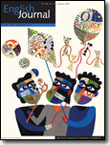
Jacobs, Dale. "More Than Words: Comics as a Means of Teaching Multiple Literacies." English Journal 96.3 (January 2007): 19-25.
Historically, comics have been viewed as a “debased or simplified word-based literacy,” explains Dale Jacobs, who considers comics to be complex, multimodal texts. Examining Ted Naifeh’'s Polly and the Pirates, Jacobs shows how comics can engage students in multiple literacies, furthering meaning-making practices in the classroom and beyond.
English Journal should be available in most academic libraries and/or via Interlibrary Loan.

Labels: , , ,

Link